
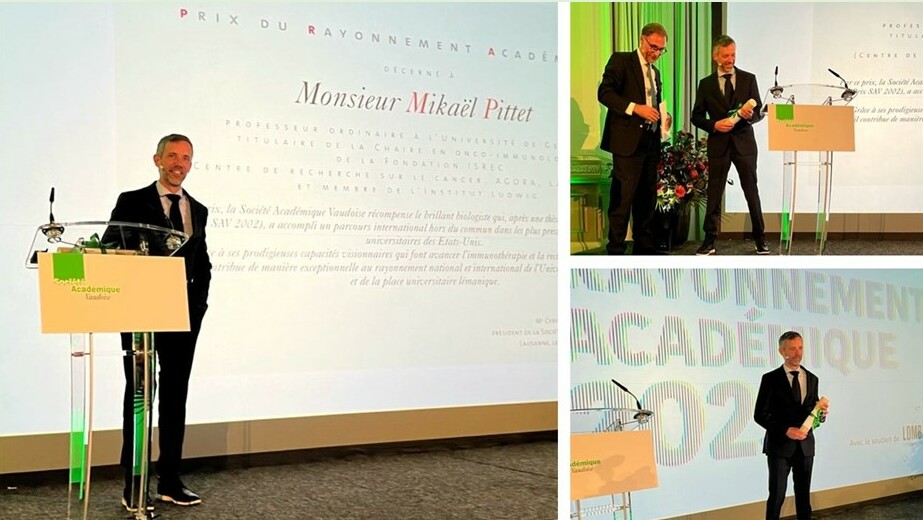
On Tuesday, October 3rd, Prof. Mikaël Pittet was presented with the Rayonnement Académique Award of the Société Académique Vaudoise by its president, Dr. Cyrille Piguet.
This prestigious prize, awarded for the first time in 2014, honors “those who make the university shine”. Thus, this distinction underlines Prof. Pittet’s outstanding scientific contributions in the field of immunotherapy. His research aims to discover how the immune system controls cancer and other diseases, and how it can be exploited for therapeutic purposes. His work has in particular led to the elucidation of how certain types of cancer are regulated by various cell classes, including cytotoxic and regulatory T cells, macrophages, monocytes, neutrophils and dendritic cells, all of which are considered drug targets for cancer immunotherapies.
The ISREC Foundation is very proud to support this eminent immunotherapy specialist’s research.
It is with great pride that we announce the new professorship created in collaboration with EPFL (Ecole polytechnique fédérale de Lausanne), which will be headed by Professor Nicolas Thomä.
The ISREC Foundation is donating 7.5 million CHF to the funding of this chair. Through this decisive donation we are able to contribute in a very tangible way to medical advances resulting from the research carried out by Prof. Thomä and his team.
Named in memory of Yves Paternot, the tireless patron and president of our Foundation (2005 to 2016) who passed away in 2016, this new professorship epitomizes our commitment to accelerating advances in the field of translational oncology. This substantial funding proudly perpetuates Yves Paternot’s vision, which has contributed to the ISREC’s impact far beyond cantonal borders and the Lake of Geneva region.
Prof. Mikaël Pittet, holder of the ISREC Foundation’s Immuno-Oncology Chair, is this year’s recipient of the Prix du Rayonnement Académique, awarded by the Société Académique Vaudoise.
This prestigious honor recognizes Prof. Pittet’s outstanding scientific contributions. The ISREC Foundation is proud to support this eminent immunotherapy specialist’s research.
Congratulations are in order for Prof. Johanna Joyce of the University of Lausanne, who, together with Roeltje Maas, has published a study in the prestigious journal Cell Press.
This study offers a first description of how the brain tumor environment acts on certain cells, so called neutrophils, to convert them into cells that prevent our immune system from fighting against cancer.
The ISREC Foundation is very pleased to have been able to contribute to this promising research.
For more information The local microenvironment drives activation of neutrophils in human brain tumors: Cell
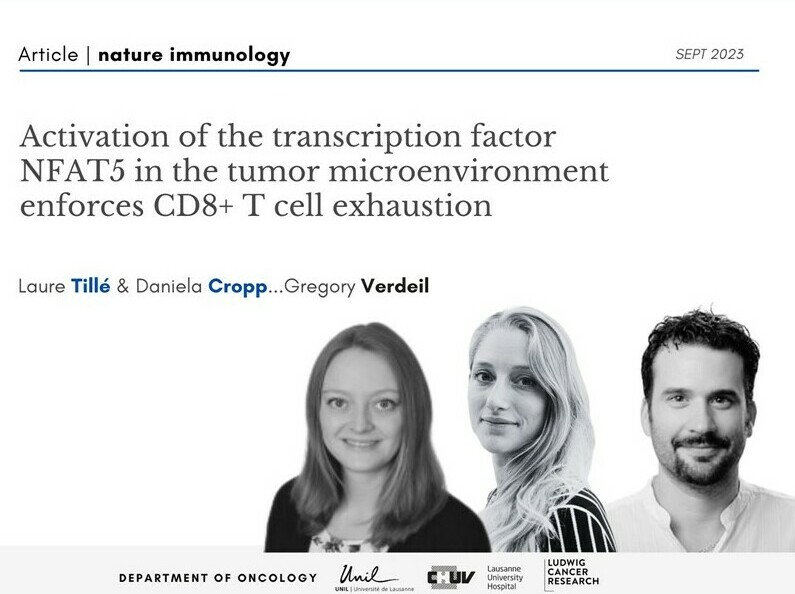
Félicitations au laboratoire du Dr Grégory Verdeil pour la publication dans la prestigieuse revue Nature Immunology de son étude sur le facteur de transcription NFAT5 qui régule l’épuisement des lymphocytes T dans le contexte du cancer mais pas lors d’une infection virale chronique.
Lien vers la publication (en anglais): Activation of the transcription factor NFAT5 in the tumor microenvironment enforces CD8+ T cell exhaustion | Nature Immunology
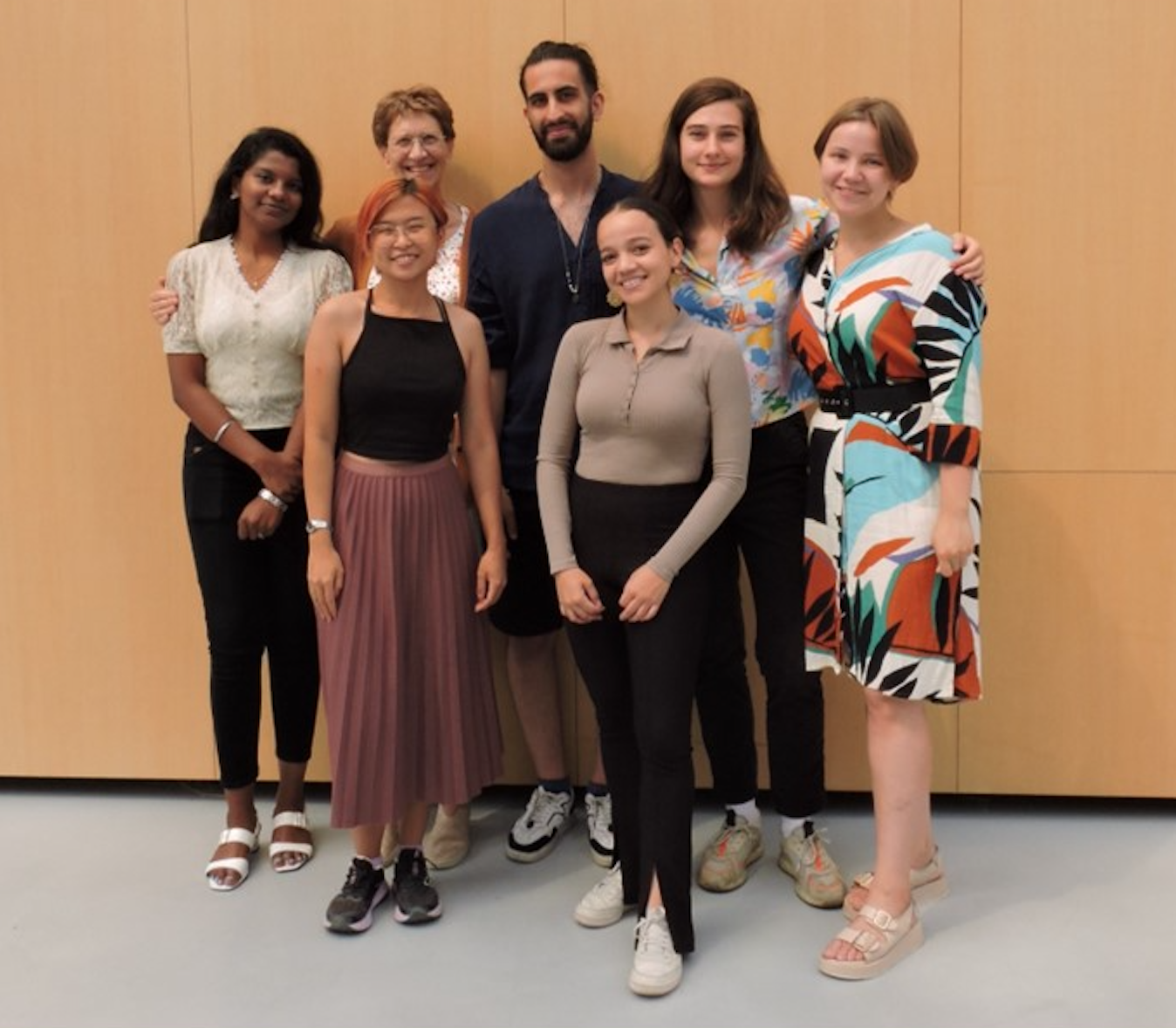
Once again, the SUR-SRP “Summer Research” program (July 3 to August 25), organized by the UNIL and the EPFL and supported by the ISREC Foundation, was a huge success. The students were thrilled to discover AGORA. We hope that this once-in-a-lifetime experience will open up new horizons for them.
This year, six research groups working in Lausanne, Geneva, Bern and Bellinzona were awarded a TANDEM grant.
Each team, consisting of a clinician and a basic research scientist, will address a question of direct clinical relevance from two angles: that of understanding the molecular mechanisms involved and that of directly improving cancer patient care.
Congratulations to Prof. Mikaël Pittet, holder of the ISREC Foundation’s Immuno-Oncology Chair at the University of Geneva: in an article published in the prestigious magazine Science, he describes how the expression of two key genes plays a crucial role in cancer progression.
Link to the scientific article
The ISREC Foundation and Two Private Foundations Based in Lausanne Finance a Pioneering Clinical Trial for Leukemia at the CHUV.
In an innovative collaborative approach, the ISREC Foundation is managing the funding of a clinical immunotherapy trial to be conducted at the CHUV. This project, which aims to develop a treatment for children and adults with acute leukemia, is funded through 2.8 million CHF in donations. Thanks to this collaboration, two private foundations can join forces to support translational cancer research and ensure professional scientific monitoring.
See our Annual Report 2022 !