
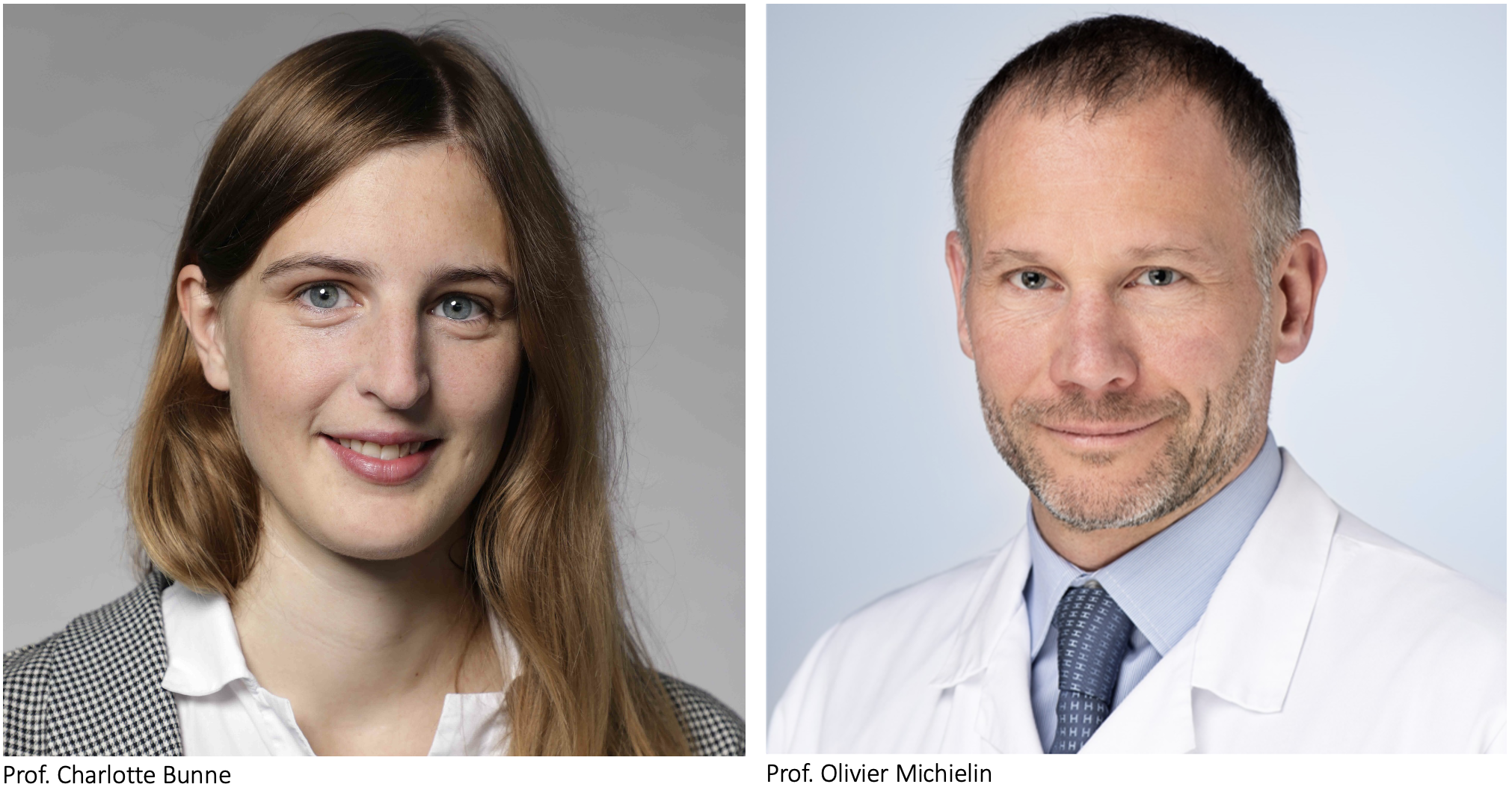
Virtual Patient Platform – Prof. Charlotte Bunne (EPFL) and Prof. Olivier Michielin (HUG)
Improved integration of medical data to guide personalized oncological care
Prof. Charlotte Bunne (EPFL) and Prof. Olivier Michielin (HUG) were granted this “allocated fund” in July 2026 for 4 years. Supported with a generous contribution of the Loterie Romande.
Today, cancer diagnoses and treatments depend on a wide range of data derived from clinical records and the analysis of tissue samples, genome, proteins, and gene expression, all of which are often examined separately. Furthermore, in Switzerland this data is scattered across different hospitals, making it even more difficult to exploit. The Virtual Patient project aims to overcome this fragmentation by creating a platform based on artificial intelligence (AI). The goal is to centralize all the information and to produce comprehensive and consistent patient profiles that will help physicians better understand the disease and plan treatments.
By connecting various information sources, Virtual Patient will provide medical teams with a more accurate and coherent overview of each clinical situation.
This will help
- improve the quality and speed of diagnoses
- guide decisions for personalized treatments more effectively
- reduce the number of unnecessary tests
- coordinate care across institutions
Eventually, this approach could improve access to innovative therapeutic strategies, particularly for complex and rare types of cancer.
Approach
The platform is based on a new generation of AI models that have been trained using large volumes of diverse medical data. It integrates clinical data and common tests in the areas of histopathology, genetic sequencing, and spatial proteomics and transcriptomics. This combination enables Virtual Patient to predict missing results, identify the most useful tests, simulate treatment responses and compare each case to situations encountered in the past. Expert panels in the field of oncology (molecular tumor boards) will test the platform. The goal is to create an interactive tool that offers recommendations based on all available data, while facilitating access to relevant clinical trials or research projects.